

Introduction: More Than Just a Bad Day
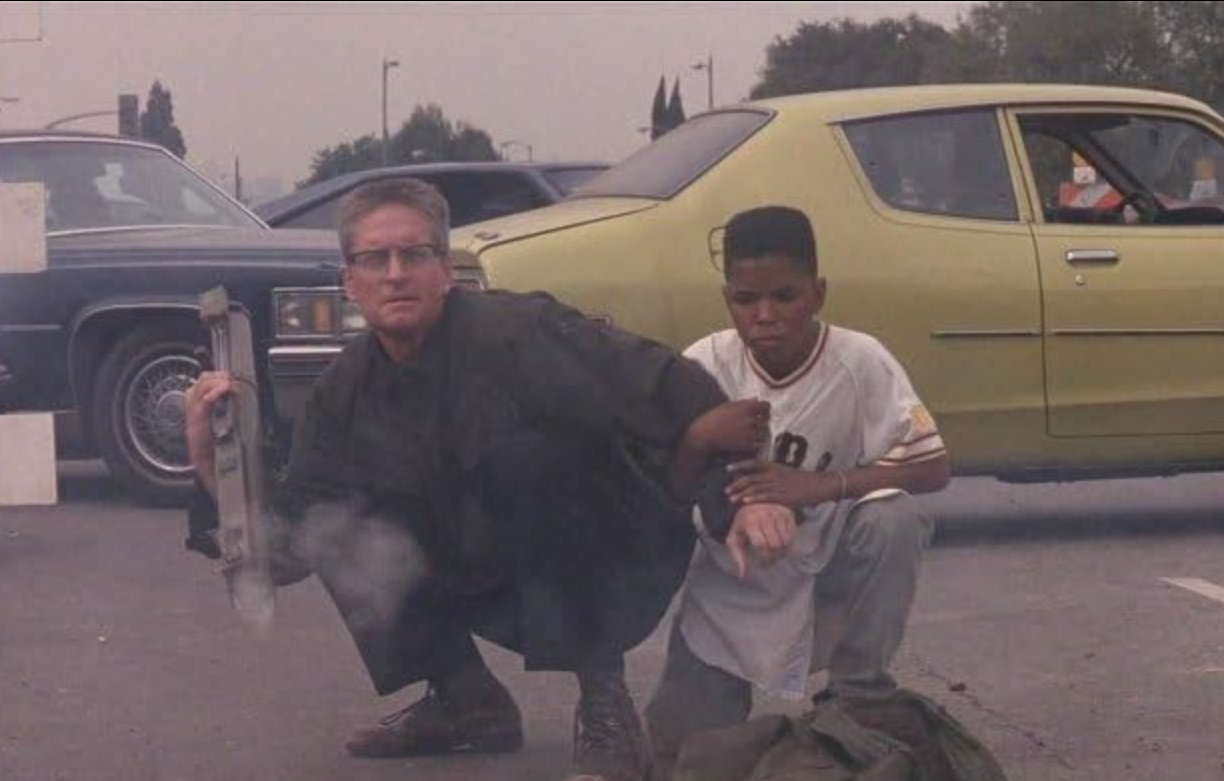
In the popular memory, Joel Schumacher’s 1993 film Falling Down is the ultimate story of an everyman snapping. Trapped in a traffic jam on the hottest day of the year, a recently unemployed defense worker named William “D-Fens” Foster abandons his car and begins a violent journey across Los Angeles, lashing out at every petty annoyance and injustice he encounters. But is there a deeper, more complex, and perhaps more disturbing truth to the film that makes it eerily relevant decades later? A closer look reveals that this controversial classic is less a simple revenge fantasy and more a prescient warning. This article explores five surprising takeaways from a film that seems to understand our modern age of rage better than we do.
——————————————————————————–
1. He Was The “Bad Guy” Long Before He Left His Car
While many viewers see William Foster as a relatable hero who simply had one bad day, the film provides clear evidence that he was a dangerous man long before his rampage. His personal pathology and professional grievance are two sides of the same coin. The film reveals him not just as a man aggrieved at his government for pushing him out of his defense contractor job, but also as a delusional misogynist and abusive sociopath. Details from his estranged wife reveal he was an abusive husband with a restraining order filed against him, who had failed to pay child support. His journey isn’t a sudden break from sanity but the public eruption of a long-simmering pathology.
The true tragedy of his character is his profound lack of self-awareness. He is so convinced of his own righteousness and victimhood that he cannot see the monster he has become. This is driven home at the film’s climax, when Detective Prendergast finally confronts him and he asks in genuine shock:
“I’m the bad guy? How did that happen? I did everything they told me to.”
——————————————————————————–
2. His Rage Wasn’t About Race—It Was About Lost Status
A common criticism of Falling Down is that it’s a racist “angry white male” fantasy. However, a closer look reveals a more complex critique of class, entitlement, and a crumbling social order. While D-Fens certainly harbors prejudices, his rage is aimed less at specific ethnic groups and more at anyone who challenges his sense of place in the world.
A careful character audit, as noted by film analysts, reveals the argument against the film as a purely racist fantasy to be textually weak. Of his primary antagonists, seven are white men, while only three are minorities. His targets include the rude construction worker, the entitled man at the phone booth, the wealthy golfer, the fast-food manager, and most notably, the Neo-Nazi army surplus store owner. The scene in that store is pivotal. The owner, a flamboyant bigot, assumes he and D-Fens are allies. Disgusted, D-Fens explicitly rejects him, stating, “we are not the same. I’m an American, you’re a sick asshole!”
His quest to “go home” is not just for a physical place, but for an “imagined past of a white America where he didn’t have to contend with the existence of people who don’t look or sound like him.” His anger is not simply racism; it is the “flailing reflex of a dying breed: the mediocre white man the American Dream was always seemingly designed for.”
——————————————————————————–
3. The Entire Rampage is Structured Like a Video Game
One of the most surprising analyses of the film is that Foster’s journey across Los Angeles mirrors the structure of a 1990s video game. His mental breakdown progresses through a series of “levels,” each with increasing difficulty, higher stakes, and more powerful weapons. The hole in his shoe even acts as a “power drainer,” slowly sapping his energy. This format turns his violent spree into a dark quest, making his psychological decay feel both systematic and tragically inevitable.
- Level One: Thirst. Foster starts with no weapon. In the Korean grocery store, he faces his first “obstacle” (high prices) and acquires a baseball bat, satisfying his thirst with a soda to add bars to his lifeline.
- Level Two: Weapons Upgrade. After fighting off gang members with the bat, he upgrades to their knife. When they return for a drive-by and crash, he upgrades again, taking their bag of guns.
- Level Three: Refuel and Reload. He goes to an Army Surplus store for new boots. After a deadly confrontation with the bigoted owner, he acquires his most powerful weapon: a rocket launcher.
——————————————————————————–
4. The Real Hero Is the Cop on His Last Day
While D-Fens is the explosive center of the film, his foil, Detective Martin Prendergast, is its true moral heart. Prendergast is a parallel character facing many of the same societal frustrations. He is on his last day before retirement from a desk job he never enjoyed, enduring his own deep personal tragedy: he is married to a very disturbed woman who was apparently responsible for the death of their only child.
The film meticulously contrasts their responses to stress. While D-Fens breaks with reality through blame and violence, Prendergast breaks from his routine with purpose, choosing to abandon his office job to pursue Foster. He represents the healthier, more difficult path of adaptation, enduring with dignity, empathy, and resilience. Throughout his pursuit, Prendergast is the only person who speaks to Foster with intelligence and respect, even as he confronts him as a criminal. He acknowledges Foster’s pain without ever excusing his actions, delivering a powerful rebuttal to his self-pity:
“Listen, pal, they lie to everyone. They lie to the fish. But that doesn’t give you any special right to do what you did today.”
——————————————————————————–
5. He Is the Patron Saint of a Disenfranchised World
The film’s most chilling takeaway is its enduring relevance. Made in the early 1990s, a time when jobs were being lost overseas and the rich were getting richer, the story taps into deep economic anxiety. This is crystallized when Foster witnesses a Black man protesting a bank that denied him a loan. He adopts the man’s slogan, “Not Economically Viable,” as his own anthem. The film’s transformative commentary, however, lies in the stark contrast that follows: the Black man is hauled off to jail for his peaceful protest, while D-Fens, a multiple murderer, is practically treated like a folk hero by some of the cops chasing him—a profound statement on white privilege.
This archetype—a man who feels abandoned by a system he served and blames a broken society for his problems—is a clear predecessor to more recent figures like Joker‘s Arthur Fleck. The lineage is direct and undeniable, articulated perfectly by Fleck’s own climactic rant:
"What do you get when you cross a mentally ill loner with a society that abandons him and treats him like trash? You get what you fuckin’ deserve!"
Falling Down uses its setting to make a powerful statement that has only grown more potent with time.
“The setting—urban decay in Los Angeles—is a metaphor for the crumbling of the American Dream, the disillusionment that comes from realizing how deep and wide the gulf is between the glossy promises and mundane realities of American life.”
——————————————————————————–
Conclusion: Don’t Fall Down
Falling Down is not a simple endorsement of rage but a complex tragedy and a profound warning. It refuses to offer easy answers, forcing us to recognize the legitimacy of modern frustrations without condoning the monstrous actions they can inspire. By showing us a man who was both a victim of his time and the villain of his own story, the film leaves us with a powerful and unsettling question. In a world still defined by many of the same pressures, what is it that keeps the rest of us from “falling down”?
Discover more from Entertainmentnutz
Subscribe to get the latest posts sent to your email.